الحج والعمرة· HAJJ & UMRAH · CAPACITY PLANNING
Baseeraبصيرة
Seven days of foresight into transport, service, and accommodation demand.
A forecasting engine trained on prior Hajj and Umrah seasons and the Islamic calendar — predicting where transport, medical, water, and accommodation demand will spike, seven days before it happens.
من أحسن التدبير، أمن من التقصير
“Plan well, and you are safe from falling short.”
What Baseera does
Seven-day rolling forecast
Demand for every major service is projected a week ahead, refreshed as new signals arrive.
Islamic calendar-aware
Models are trained against Hijri dates and ritual days, not just generic day-of-week seasonality.
Service-by-zone granularity
Forecasts break down by service type and Haram zone — transport in Mina looks nothing like water demand in Arafat.
Confidence-scored predictions
Every forecast ships with a confidence level, so planners know which numbers to bet capacity on.
Automatic gap alerts
When predicted demand outruns planned capacity, an alert fires days before the shortfall would hit.
Continuous retraining
The model retrains every 6 hours during the season as live Nusuk and transport data arrives.
See Baseera in action
An early UX walkthrough of the product, designed bilingually from day one.
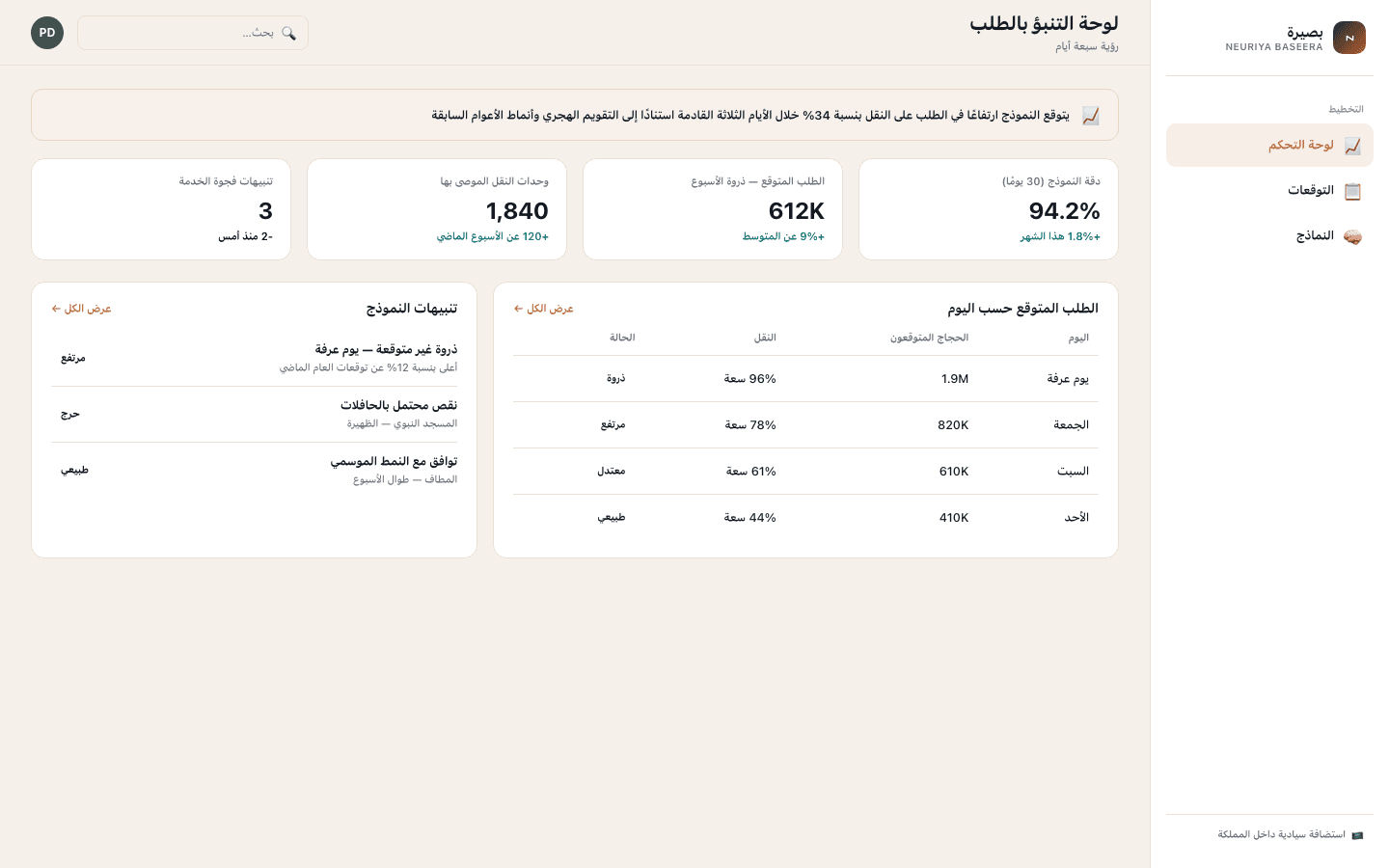
Forecast dashboard
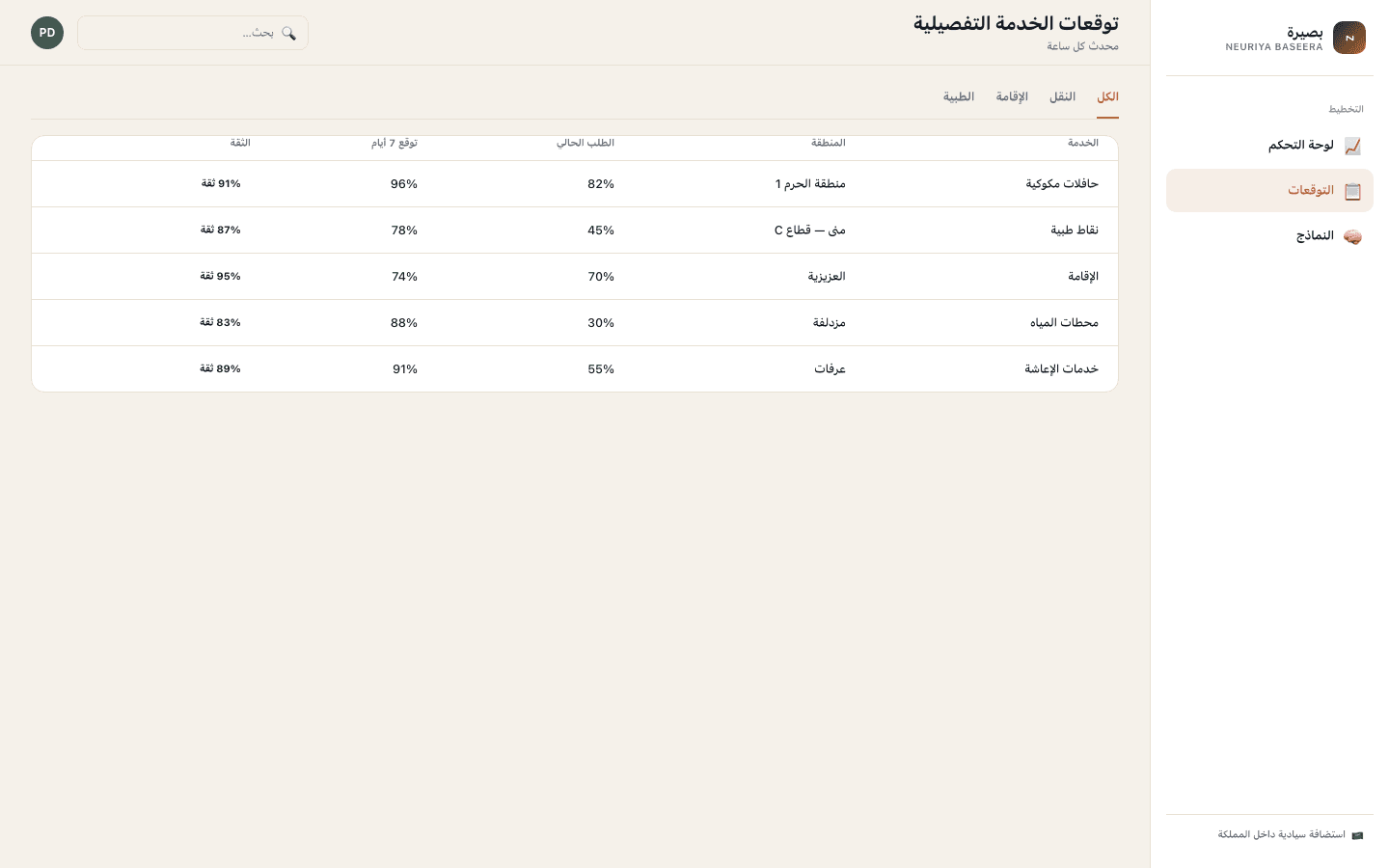
Detailed service forecasts
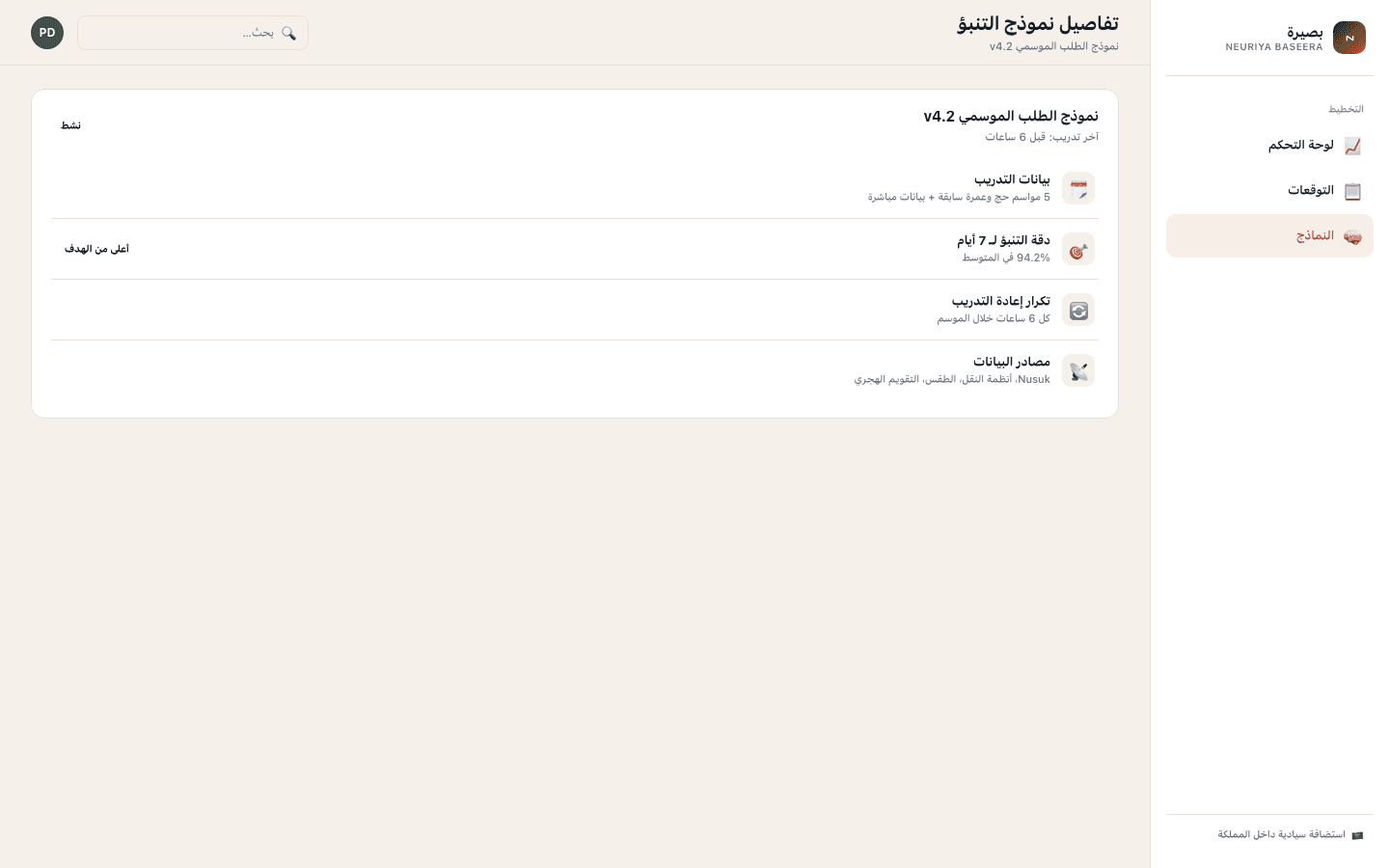
Model detail
How it works
Feed the model
Nusuk registrations, transport systems, weather, and five prior seasons train the forecast.
Forecast seven days out
Demand for transport, accommodation, medical, and food services is projected by zone.
Flag the gaps
Any service where predicted demand exceeds planned capacity is surfaced as an alert.
Retrain continuously
The model updates every 6 hours through the season as real demand confirms or corrects it.
Plan capacity a week before you need it
We're selecting design-partner Hajj and Umrah operators for the first pilot cohort. Book a briefing to see the product and discuss fit.
Request a Pilot